Warm Light and Borrowed Time: What Actually Creates Those Magic Late-Season Days
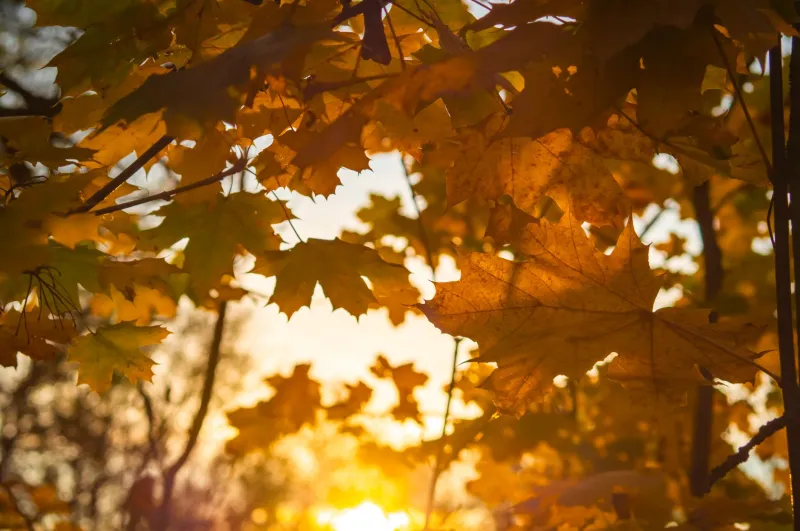
There's a particular kind of afternoon that autumn delivers like a surprise gift. The leaves are already burning orange and red, the morning air has that crisp bite you've come to expect, and then — somewhere around midday — the temperature climbs into the low 70s and the sun goes soft and golden. You pull off your jacket. You linger on the porch a little longer than planned. You think: this is it. This is the thing.
That thing has a name. Indian summer. And while most of us recognize it instantly when it arrives, far fewer people understand the actual science that conjures it. Spoiler: it's even more fascinating than the feeling itself.
What Indian Summer Actually Means (Meteorologically Speaking)
Before we get into the mechanics, it helps to clarify what Indian summer is — and isn't. The term refers specifically to a spell of warm, dry, hazy weather that occurs after the first hard frost of autumn, typically between late September and mid-November. That last part matters: it has to come after a cold snap. A warm week in early September is just a late summer holdout. True Indian summer is warmth that returns after the cold has already staked its claim.
Meteorologists generally define it as a period of at least two to three days where daytime temperatures reach into the 60s or 70s°F following a killing frost. The air tends to be unusually calm, skies are often hazy or milky rather than crisp and blue, and nights remain cool — sometimes sharply so. It's a liminal experience, weather caught between two seasons, and that in-between quality is a big part of what makes it feel so emotionally loaded.
The High-Pressure System That Makes It All Happen
At its core, Indian summer is driven by a large, slow-moving high-pressure system settling over a region. High-pressure systems are atmospheric zones where air descends from higher altitudes toward the surface. As that air sinks, it compresses and warms — a process called adiabatic heating. The descending air also suppresses cloud formation, which is why Indian summer days tend to be sunny and relatively clear (or at least hazy-clear rather than overcast).
What makes the fall version of this phenomenon special is timing and contrast. By October, the sun's angle has dropped significantly — we're receiving less direct solar radiation than we were in July. So when a high-pressure dome parks over a region and allows that descending warm air to accumulate, it's doing a lot of heavy lifting against the season. The warmth feels almost improbable, which is exactly why it registers so strongly.
The characteristic haze that accompanies Indian summer isn't just poetic atmosphere — it has a physical explanation. Smoke from distant wildfires, agricultural burning, and even particulate matter that accumulates under stagnant high-pressure conditions all contribute to that gauzy, diffuse light quality. That golden-amber glow that makes everything look like it's lit from within? That's physics.
Regional Variations Across the US
Not all Indian summers are created equal, and where you live shapes how you experience them.
In New England, Indian summer arrives with particular drama. After the region's notoriously sharp early frosts, a warm spell in mid-October hits differently. The full foliage canopy is still intact, and that warm amber light filters through peak-color leaves in a way that feels almost cinematic. Boston, Vermont, and the Berkshires are practically synonymous with this experience.
Across the Midwest, Indian summer tends to be broader and more sustained. The flat topography allows high-pressure systems to spread widely, meaning states like Ohio, Indiana, and Illinois can enjoy warm spells that last a full week or more. The Great Lakes add a layer of atmospheric moisture that softens the light in a way that feels distinctly autumnal rather than summery.
In the Southeast, the dynamic shifts. Summers run so long and hot that the first genuine cool-down of fall feels like the gift, and any warm-up after that reads as a familiar, almost nostalgic return. Georgia and the Carolinas experience Indian summer as a gentler phenomenon — less dramatic than New England, but no less welcome.
Out West, particularly in the Pacific Northwest and Northern Rockies, the interplay between Indian summer warmth and wildfire smoke creates that iconic amber-haze quality in a very literal way. Warm, dry high-pressure systems in October can extend fire season while simultaneously producing some of the most visually stunning autumn days anywhere in the country.
Why the First Frost Matters So Much
The requirement that Indian summer follow a killing frost isn't arbitrary — it's what gives the phenomenon its emotional weight. Once a hard frost has arrived, something in the collective human psyche accepts that summer is genuinely over. We've made our peace with it. The sweaters are out, the garden is done, the mentality has shifted.
And then the warmth comes back.
Researchers who study human responses to weather have noted that people consistently rate warm days higher in subjective enjoyment when they follow a cold spell than when they occur in an unbroken warm stretch. The contrast effect is real. Indian summer temperatures that would feel unremarkable in July feel genuinely luxurious in October — not because the mercury is higher, but because we've already grieved what we thought we'd lost.
This is, honestly, a big part of why the Indian summer concept resonates so deeply as a brand identity. It's not just about warmth. It's about warmth that comes back. Second chances. The season reminding you not to rush toward what's next before you've fully inhabited what's now.
Anticipating Indian Summer: Can You Plan for It?
Modern weather modeling has gotten remarkably good at predicting large-scale high-pressure patterns one to two weeks out, which means Indian summer spells are often forecastable with reasonable accuracy. The NOAA Climate Prediction Center releases seasonal outlooks that can signal elevated probability of above-normal temperatures in specific regions during the fall months.
That said, the exact timing, duration, and character of any given Indian summer remains genuinely unpredictable at the micro level. Some years, the Northeast gets a full two-week stretch of golden warmth. Other years, it's a single long weekend. Some Indian summers come in October; others sneak in as late as early November.
Which means the best strategy is to stay ready. Keep the right layers accessible. Don't pack away every lightweight piece the moment the first frost hits. And when those warm days arrive — and they will arrive — meet them fully prepared to be outside in them.
The Season That Earns Its Name
The origin of the term "Indian summer" is genuinely debated among historians and etymologists, with theories ranging from references to Native American seasonal practices to early colonial observations about weather patterns in specific regions. What's not debated is how deeply the concept has embedded itself in American cultural life over the past three centuries.
It shows up in literature, in music, in regional idiom. It shapes how Americans think about autumn — not as a single, steady decline toward winter, but as a more complex, generous season capable of surprise and reversal. The golden light, the borrowed warmth, the hazy afternoons that stretch longer than they should: these are things worth dressing for, worth savoring, worth building a whole aesthetic around.
At Indian Summer Shop, that's exactly what we do. The science behind these warm spells is real and fascinating — but so is the feeling they create. And that feeling is worth celebrating every single year.