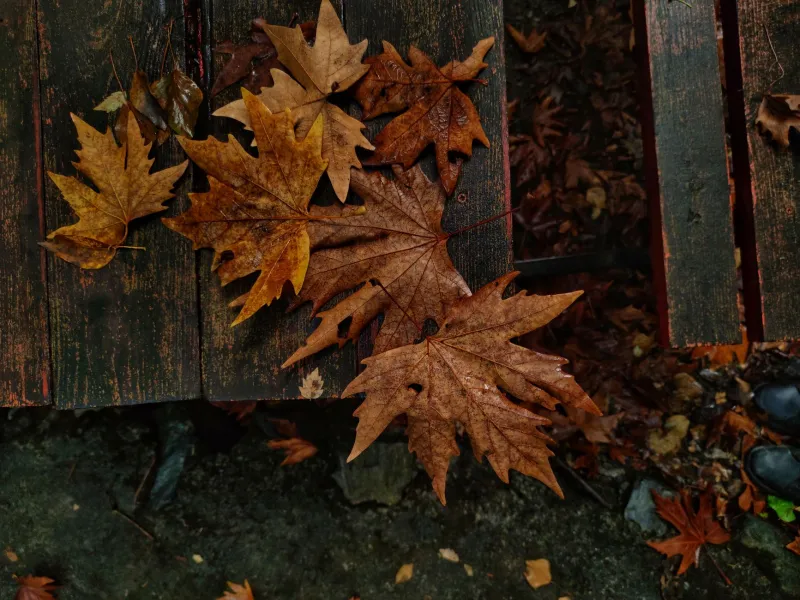
When the Clock Falls Back but the Heat Doesn't: Navigating the Weirdest Week of Indian Summer
Somewhere around the first Sunday in November, about 330 million Americans move their clocks back one hour and lose the evening light. In most years, this lines up reasonably well with what's happening outside — it's getting cold, the leaves are mostly down, and the darkness feels appropriate. It matches.
But in an Indian summer year, the clock change arrives while the weather is still doing something entirely different. It's 72 degrees. You've been eating dinner outside. The light at four in the afternoon is still that thick, amber, horizontal light that feels like it belongs to October. And then suddenly — dark at five, the thermometer still reading warmth, your brain completely confused about what season it is and what it's supposed to want.
This is one of the more disorienting experiences Indian summer produces, and it doesn't get talked about nearly enough.
The Mismatch Your Brain Didn't Sign Up For
Humans are not great at handling seasonal mismatches. Our internal clocks — circadian rhythms, but also the broader psychological calendars we carry — are calibrated on associations. Cold means dark means winter means slow down. Warm means light means summer means stay out late. These associations run deep, and they're not always conscious.
When Daylight Saving Time ends during an Indian summer, those associations collide in real time. Your body registers warmth and wants to stay active, social, outdoors. Your eyes register darkness at 5:15 p.m. and start sending signals that it's time to wind down. Your phone says it's early evening. Your porch says it's still a perfectly good night to sit outside. Your kitchen says dinner, your couch says sleep, and none of these messages are arriving in the right order.
This isn't a minor inconvenience. Research consistently shows that the fall clock change disrupts sleep patterns, mood, and energy levels even in normal years. Add an Indian summer into the equation — where the warmth is actively encouraging you to stay in summer mode — and the disruption gets amplified in ways that feel almost personal, like the season is playing a trick on you.
The Evening That Disappears
The most concrete loss is the outdoor evening. During Indian summer, the window between the end of the workday and actual nightfall is one of the most valuable stretches of time the season offers. That hour or two of warm, golden late-afternoon light — when you might sit on the porch, take a walk, open the windows and let the air move through — gets cut dramatically when the clocks fall back.
Before the change, you might have had until 6:30 or 7:00 p.m. of usable outdoor light. After the change, that window closes around 5:00 or 5:15 p.m. In practical terms, if you work a standard schedule, you've lost the entire outdoor evening. You leave for work in daylight, you come home in the dark, and the warm air outside is something you experience entirely in the absence of light.
This is genuinely strange. The warmth is still there — you can feel it when you step outside — but the visual experience of Indian summer, that golden-light quality that defines the season aesthetically, has been cut off by a bureaucratic decision made in 1918 and never fully resolved since.
How to Reclaim What the Clock Took
The shift doesn't have to mean surrendering the season. It just requires moving your relationship with it earlier in the day.
Shift your outdoor time to midday. If you have any flexibility in your schedule — a lunch break, a work-from-home situation, a flexible commute — the hour between noon and two o'clock becomes the new golden hour during post-time-change Indian summer. The light is still warm, the temperature is still comfortable, and there's nobody else out there because everyone else is inside pretending it's already winter.
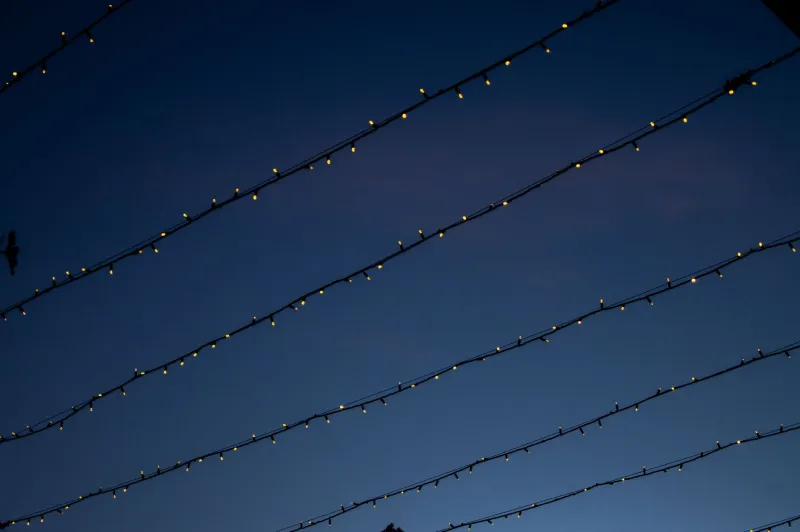
Light your evenings intentionally. String lights, candles, a fire table — the loss of natural evening light doesn't have to mean the loss of outdoor evening time. It means creating your own version of it. A well-lit porch or patio in 65-degree November warmth is genuinely pleasant in a way that feels almost secret, like you've found something most people missed. The darkness actually adds something: the contrast between warm air and dark sky is its own kind of atmosphere.
Resist the urge to close everything down. The clock change triggers a nesting instinct in a lot of people — suddenly it feels like time to seal up the windows, pull out the heavy blankets, and stop thinking about outdoor life until April. But if it's 68 degrees outside and the air smells like dried leaves and wood smoke, you're not obligated to comply with that instinct. Open the window. Sit on the steps for ten minutes after dinner. The season hasn't ended just because the clock said something different.
The Psychological Trick Indian Summer Plays Here
There's something almost poignant about experiencing Indian summer after the clock change. The warmth feels more precious when it's arriving in the dark. The fact that you can't see it as easily makes you notice it differently — through feel, through smell, through the way the air moves. Some people find this version of the season more affecting than the well-lit golden days that came before it.
It's the same phenomenon that makes the last warm evening feel more significant than the first one. Scarcity sharpens attention. When you know the warmth is running out, and the darkness is arriving early to remind you of that fact, each warm evening carries more weight.
Daylight Saving Time ending during Indian summer is not a glitch. It's an intensifier. It makes the season feel more urgent and more fleeting, which is exactly the quality that makes Indian summer worth paying attention to in the first place.
One More Thing Worth Saying
If you've been feeling a little off since the clocks changed — tired at the wrong times, vaguely unsettled, not quite sure what to do with yourself in the evenings — that's not weakness. That's a reasonable response to a genuinely disorienting situation. Your internal calendar is doing its best with contradictory information.
Give it a few days. Go outside at noon. Light something on your porch after dinner. And remember that the warmth, however much the clock is trying to tell you otherwise, is still real.