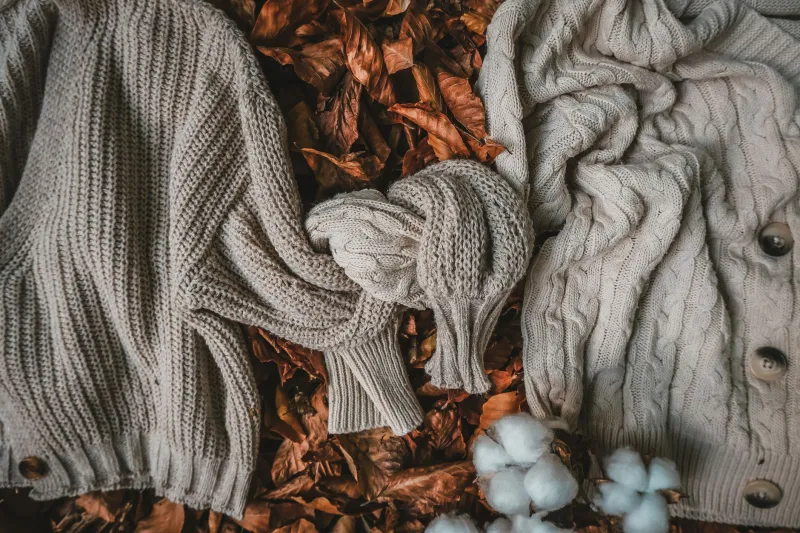
Spending Real Money on Fake Fall: The Shopping Habit Nobody Wants to Admit

Let's be honest about something. You've bought a flannel shirt in September that you couldn't wear until November. You've picked up a caramel-brown turtleneck because the vibe was right, even though the forecast said mid-70s for the next two weeks. You've stood in a Target aisle holding a cable-knit throw blanket while still wearing shorts, and you put it in the cart anyway.
You're not alone. And you're not being irrational — at least not entirely.
There's a very specific shopping phenomenon that happens every year during Indian summer, that golden, stubborn stretch of warm days that refuses to leave even after the calendar insists it's fall. People buy autumn clothes they can't wear yet, stock up on seasonal décor before the season technically fits, and somehow feel completely fine about it. Until the credit card bill arrives.
So what's actually going on here?
The Emotional Calendar Doesn't Match the Weather App
Here's the core tension: your brain runs on a different schedule than the thermometer.
By early October, most people in the US have already been primed for fall for weeks. Retailers started dropping pumpkin displays in late August. Your Instagram feed has been full of apple orchard photos since Labor Day. The Starbucks PSL launched before summer even thought about ending. Culturally, emotionally, aesthetically — fall has already begun.
So when you walk into a store and see a perfect burnt-orange midi skirt or a pair of dark caramel leather boots, your brain doesn't think it's still 76 degrees outside. It thinks this is exactly what right now feels like. And right now, emotionally, is fall.
Psychologists call this kind of decision-making affective forecasting — buying for the feeling you anticipate rather than the reality you're currently in. You're not shopping for today's weather. You're shopping for the version of fall you've already built in your head. The one with dry leaves and wood smoke and an actual reason to wear that oversized wool coat.
FOMO Has a Seasonal Variant, and It Hits Hard in October
There's another layer to this, and it's more uncomfortable to admit: scarcity anxiety.
Retailers know that fall inventory moves fast. The good stuff — the real statement pieces, the limited colorways, the styles that actually sell out — doesn't sit on shelves waiting for the weather to cooperate. If you wait until it's genuinely cool enough to wear a chunky cardigan, your size might be gone. The color you wanted might be picked over. The window for getting exactly what you wanted at full selection has closed.
So you buy early. You buy in anticipation. You buy because waiting feels like losing.
This is especially true during Indian summer, when the gap between wanting fall and living in fall is at its widest. The season is right there — you can smell it in the evening air, see it in the slant of late-afternoon light — but you can't quite live it yet. Buying fall clothes becomes a way of closing that gap. It's participation before the party officially starts.
What Retailers Know That You Don't
Here's something worth understanding: the fashion industry plans its inventory around a calendar that has almost nothing to do with actual weather.
Fall collections hit stores in July and August. By October, many retailers are already transitioning to holiday merchandise. The "fall" window from a retail planning perspective is genuinely short — and it front-loads heavily into a period when most of the country is still dealing with lingering summer temperatures.
That's not an accident. Retailers have figured out that the emotional appetite for fall arrives weeks before the physical reality does. So they feed it early, move product fast, and count on consumers doing exactly what you do: buying the sweater before you need the sweater.
The result is that your closet ends up with a small pile of unworn-but-technically-purchased fall pieces just waiting for the temperature to drop. Most years, they get their moment. Some years, Indian summer drags on long enough that you're wearing a Halloween costume before you've ever actually needed that wool-blend blazer.
The Three-Week Wardrobe Problem
Here's where it gets a little tricky from a cost-per-wear standpoint.
A lot of the items people buy specifically for that cozy, layered, golden-light fall aesthetic have a surprisingly narrow window of actual use. Heavy knits, thick corduroys, dark suede boots — these things work great in a 50-degree October. But if Indian summer runs through the end of the month and then November goes straight to cold, you might get three weeks of prime wearing time before the piece becomes either too light for winter or too heavy for anything else.
That's not a reason not to buy them. But it is a reason to be intentional about which ones you buy.
The Indian summer wardrobe sweet spot is actually about transition pieces rather than full commitment pieces. Think lightweight layers that work in 65 degrees but still read as fall — an unlined suede jacket, a cotton-linen blend in a warm rust or deep olive, ankle boots that don't require thick socks. These pieces earn their keep across a much longer window than the chunky fisherman's knit that technically only fits about six weeks of the year.
How to Shop Indian Summer Without Buyer's Regret
If you're going to lean into the season — and honestly, you should, because this is one of the most beautiful shopping windows of the year — here's how to do it without waking up in January wondering why you own three unworn camel-colored blazers.
Buy for the whole transition, not just the aesthetic peak. The best Indian summer pieces work across a temperature range. A linen-cotton blend tunic in a warm amber reads as fall but breathes like summer. That's the sweet spot.
Prioritize versatility over statement. The rust-red corduroy jacket that only works with one specific outfit is a gamble. The dark olive chore coat that layers over everything you already own is an investment.
Give yourself a 48-hour rule on impulse seasonal buys. If you see something that feels like peak fall aesthetic and you're standing in the store sweating slightly, wait two days. If you still want it, it's probably not pure FOMO. If you've forgotten about it, you have your answer.
Think in cost-per-wear, not cost-per-season. A $120 item you wear 40 times is a smarter buy than a $40 item you wear four times. Indian summer pieces that earn their keep are the ones flexible enough to stretch across the full fall-into-winter arc.
The Beautiful Irony of Buying Into a Season Early
Here's the thing, though. There's something kind of wonderful about the Indian summer shopping impulse, even when it's a little irrational.
Buying fall clothes before fall fully arrives is an act of optimism. It's saying: I believe this season is coming. I'm making space for it. I'm ready. In a weird way, it's one of the more hopeful things you can do with a debit card.
Indian summer is a borrowed season — warm days living on borrowed time, beautiful precisely because they're temporary. Shopping for it, dressing for it, leaning into it even when the weather hasn't fully committed yet? That's just you refusing to let the calendar tell you how to feel.
Wear the boots. Buy the cardigan. The temperature will catch up eventually.