Your Nose Wants Fall Even When Your Sweat Glands Disagree
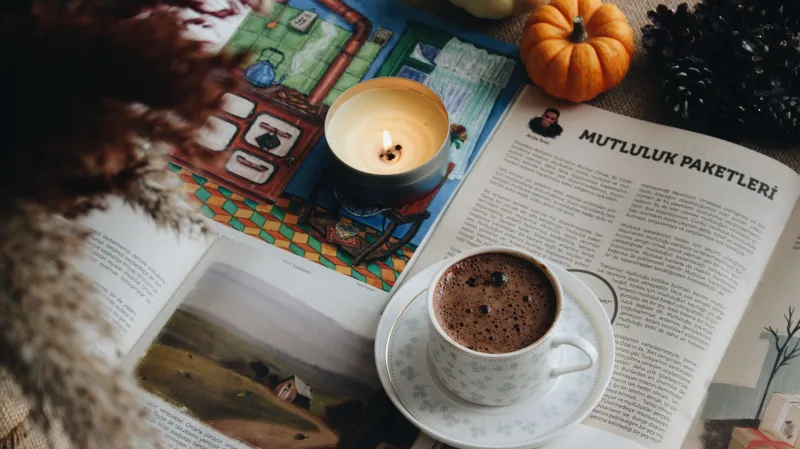
It's 76 degrees outside. You're in a tank top. The fan is on. And somehow you're standing in a home goods store with your face buried in a jar candle that smells like charred birch and dried clove, thinking yes, this is exactly right.
Welcome to the Indian summer smell test—the sensory experience where your nose votes for November while your body is still firmly in August.
This isn't just a quirk. There's real neuroscience behind why autumn aromas feel so magnetic when the temperature refuses to cooperate, and understanding it might change how you approach fragrance during those golden, confusing weeks when the calendar says fall but the thermometer says otherwise.
The Brain's Shortcut: Smell as a Time Machine
Of all five senses, smell has the most direct line to memory and emotion. That's not poetic license—it's anatomy. Odor signals travel through the olfactory bulb and land almost immediately in the amygdala and hippocampus, the brain's emotional and memory centers, before they even reach the cortex where conscious thought happens.
What this means in practice: you smell something, and you feel something before you understand why.
During Indian summer, that mechanism goes into overdrive. Your brain has been conditioned over years—decades, really—to associate specific scents with the emotional texture of autumn. Woodsmoke means weekends. Pumpkin and nutmeg mean warmth, family, slowing down. Damp leaves mean that particular kind of melancholy that actually feels good. These associations are deep and they're fast.
So when you walk past a bakery putting out spiced apple muffins on a 74-degree afternoon in late October, your nervous system doesn't wait to check the weather app. It just goes there.
Why the Disconnect Doesn't Actually Bother Us
Here's the interesting part: the mismatch between what you're smelling and what you're physically feeling doesn't create confusion so much as it creates a kind of pleasant tension.
Fragrance experts sometimes call this "temporal contrast"—when a scent places you in a different sensory moment than the one you're physically inhabiting. Think about how a winter-spiced cologne smells different in July versus January. In January it's expected. In July it's almost transgressive, and weirdly compelling.
During Indian summer, you're living inside that contrast every day. The warmth is real. The light is golden and low. But the air carries just enough of that cool, vegetal, slightly decaying quality that comes with the season shifting—and your nose locks onto it immediately, even when your skin is still warm.
That's the specific sensory magic of these weeks. You're not confused. You're calibrating.
The Scents That Actually Work in Warm Fall Weather
Not all autumn fragrances behave the same way in the heat. Some of the heavier, more resinous fall scents—think dense amber, thick vanilla, or deep oud—can become almost oppressive when temperatures are still in the mid-70s. They're built to warm up on cool skin, and on warm skin they can tip from cozy into cloying fast.
The good news: there's a whole category of fall scents that are genuinely designed for this in-between weather, even if they're not always marketed that way.
Dry woods over sweet resins. Cedarwood, sandalwood, and vetiver read as autumnal without the heaviness of richer amber bases. They're grounded and earthy without trapping heat.
Spice-forward but not gourmand. There's a difference between a fragrance that smells like a pumpkin pie and one that smells like the spices in a pumpkin pie. Black pepper, cardamom, and dried clove are fall-adjacent without the sugar overload that can feel stifling in warm weather.
Green and herbal transitions. Scents built around dried grass, sage, bay leaf, or even tobacco leaf bridge the gap between summer's brightness and fall's depth. They smell like the season is changing without committing fully to either side.
Light smoke notes. A whisper of smoke—not a bonfire, just the memory of one—is one of the most effective ways to signal autumn without adding olfactory weight. Look for fragrances that describe themselves as smoky or woody rather than heavily incense-based.
How to Layer Without Creating a Sensory Disaster
Layering fragrances is a legitimate art form, and Indian summer is both a great time to experiment with it and an easy time to overdo it. Warm weather amplifies everything. What smells balanced in October might hit like a wall in late September when it's still sunny and humid.
A few principles that actually hold up:
Start lighter than you think you need to. Apply less than usual. Warmth projects scent further, so one spray in a warm October afternoon carries the same presence as two sprays on a cold November morning.
Pulse points, not clothes. Skin interacts with fragrance in a way that fabric doesn't—it warms and evolves the scent. On warmer days especially, spraying on clothing can lock in the initial blast without letting it develop naturally.
Layer from lightest to heaviest. If you're combining scents, start with the most transparent (something citrus or green) and layer a warmer, spicier note on top. This creates depth without density.
Give it time. The top notes of a fragrance—the first thing you smell when you spray—burn off quickly in the heat. Wait ten minutes before deciding if the scent is working. The dry-down is where autumn fragrances actually live.
The Emotional Logic of Smelling Like Fall in the Heat
There's a reason people reach for pumpkin candles while the AC runs and apple cider soap while they're still wearing flip-flops. It's not denial. It's anticipation—a sensory lean into something you know is coming, even if it hasn't fully arrived.
Indian summer is the season of almost. Almost cool. Almost done with summer. Almost at the table with everyone you love. The fragrances we reach for during these weeks are doing emotional work, helping us make the transition before the temperature actually makes it for us.
Your nose, it turns out, is better at reading the season than your thermometer. It catches the dryness in the air before you consciously notice it. It picks up the faint leafy undertone in a warm breeze that your skin would register as just another summer afternoon.
So the next time you find yourself reaching for a fall candle while the fan is still on—trust it. Your senses aren't confused. They're just ahead of the weather.
And honestly? That's kind of the whole point of Indian summer.